Embroidery traditions by country give a boutique its best stories: a technique with a place, a history and a look customers can recognise. This guide covers 15 regions, the signature technique of each and how it could inform a kids clothing range, plus cautions on scale and respect for the culture behind each motif.
Last updated: October 28, 2026. Written by the Cherrysmock team from real wholesale orders of hand-smocked kids clothing made in Hanoi, Vietnam.
Quick answer: Each region below has a signature technique: Vietnam and Spain for smocking and fine hand work, the Philippines for piña and calado, India for chikankari and aari, Portugal for Madeira, Ukraine for vyshyvanka, Romania for the ie blouse, Hungary for floral work, Palestine for tatreez, and more. Use them as inspiration and sourcing leads, and credit the tradition.
Buying wholesale for your boutique?
Cherrysmock is a hand-smocked children's clothing manufacturer in Hanoi. Browse wholesale smocked clothing, princess dresses wholesale (ready to ship), seasonal smocked collections or design your own smocked clothing. MOQ from 10 pcs per style.
Get the price list on WhatsAppWe describe general traditions, not specific makers. Details vary by community, so verify with a maker before you make claims on a hang tag. For the craft of smocking itself, see smocking.
Fifteen regions at a glance
| # | Region | Signature technique | Kids clothing idea | Scale for small shops |
|---|---|---|---|---|
| 1 | Vietnam (Hanoi, Ninh Binh, Hue) | Hand smocking, hand embroidery, lace | Smocked dresses, sets | Good, small lots |
| 2 | Philippines (Lumban, Taal) | Piña and jusi hand embroidery, calado | Christening and formal wear | Limited, premium |
| 3 | India (Lucknow, Gujarat, Kolkata) | Chikankari, aari, mirror work | Tunics, festival dresses | Large, varied quality |
| 4 | China (Suzhou, Shantou) | Silk embroidery, drawnwork, machine | Mass kids wear, lace | Large volume |
| 5 | Portugal (Madeira) | Madeira embroidery, eyelet and cut work | Christening, baby wear | Small, high price |
| 6 | Switzerland (St. Gallen) | Machine embroidered lace fabric | Fabric for premium wear | Fabric, not sewing |
| 7 | Ukraine | Vyshyvanka, cross stitch | Folk shirts and dresses | Small; supply risk, verify |
| 8 | Mexico and Guatemala | Bright hand embroidery, Maya weaving | Blouses, dresses | Small, uneven |
| 9 | Turkey | Machine work for EU kids wear | Girls’ dresses | Medium |
| 10 | Pakistan | Hand and machine, mirror, kantha | Traditional kids wear | Medium |
| 11 | Bangladesh | Nakshi kantha, volume sewing | Basics | Large, high MOQ |
| 12 | Hungary | Floral embroidery (Kalocsa) | Folk blouses | Small |
| 13 | Romania | Ie blouse, geometric stitch | Blouses | Small |
| 14 | Palestine and Jordan | Tatreez cross stitch | Dresses with meaningful motifs | Small; respect needed |
| 15 | Spain | Smocking and hand embroidery on baby wear | Heirloom baby wear | Small, premium |
The scale column is our judgement of how easy it is for a small shop to place an order in the region. It is not a measurement and it changes.
How to use embroidery traditions by country in a range
- Choose one story, not five. A tradition has to fit your customer.
- Match technique to product. Smocking suits dresses and rompers; heavy metal thread suits ceremonial pieces, not play clothes.
- Credit the origin on hang tags and product pages.
- Avoid copying sacred or community-specific patterns without understanding what they mean. Tatreez motifs, for instance, carry cultural meaning.
Where small shops can source embroidery traditions by country
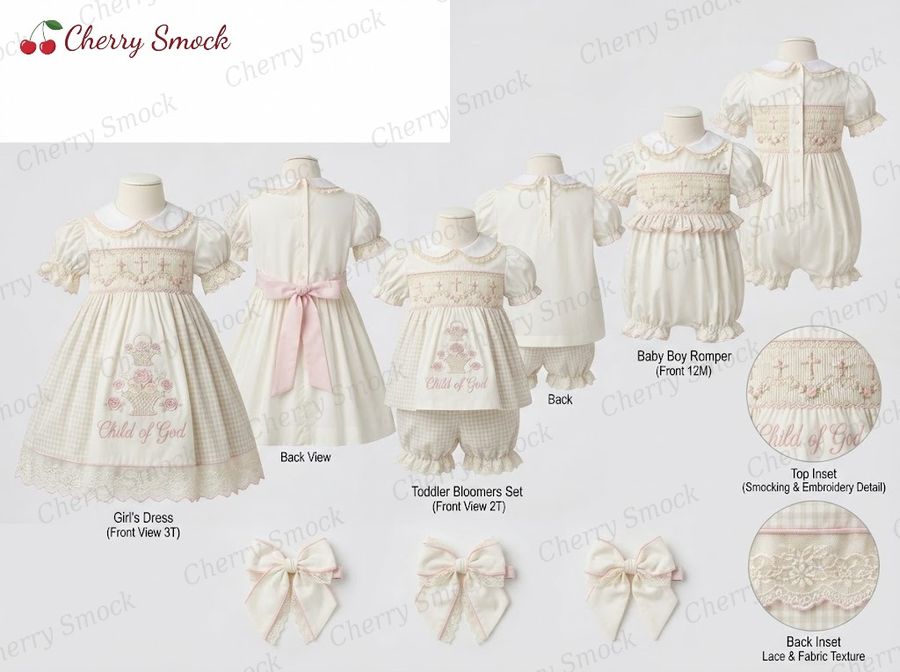
For hand work in small lots, Vietnam, the Philippines and parts of India and Portugal are the usual leads; see our smocked clothing manufacturers list and the country comparison. For fabric, Switzerland and Portugal are known for premium embroidered cloth, but prices are high.
Turn embroidery traditions by country into a product
Write a short story card (80 words): where the technique comes from, how it is made and why it suits a child’s garment. Use exclusive designs so your version is yours. Price it one tier up; see price tiers.
Mistakes to avoid
- Claiming a tradition you cannot verify.
- Using heavy trims (metal thread, beads) on baby wear without a safety check.
- Treating a culture’s motif as a generic pattern.
A simple story card template for embroidery traditions by country
Use four lines: the place, the technique, the feel on a child’s garment and how you source it. Keeping the card short makes your take on embroidery traditions by country easy to read on a hang tag and on a product page. Review the card each season and update anything you can no longer verify.
Checklist before launching a heritage capsule
- Have you picked one of the embroidery traditions by country and can you explain it in two sentences?
- Does the technique suit the garment and the child’s comfort?
- Can your maker show a close-up and a sample?
- Have you credited the origin and avoided sacred patterns?
- Is the price one tier above your basics, and does the landed cost leave margin?
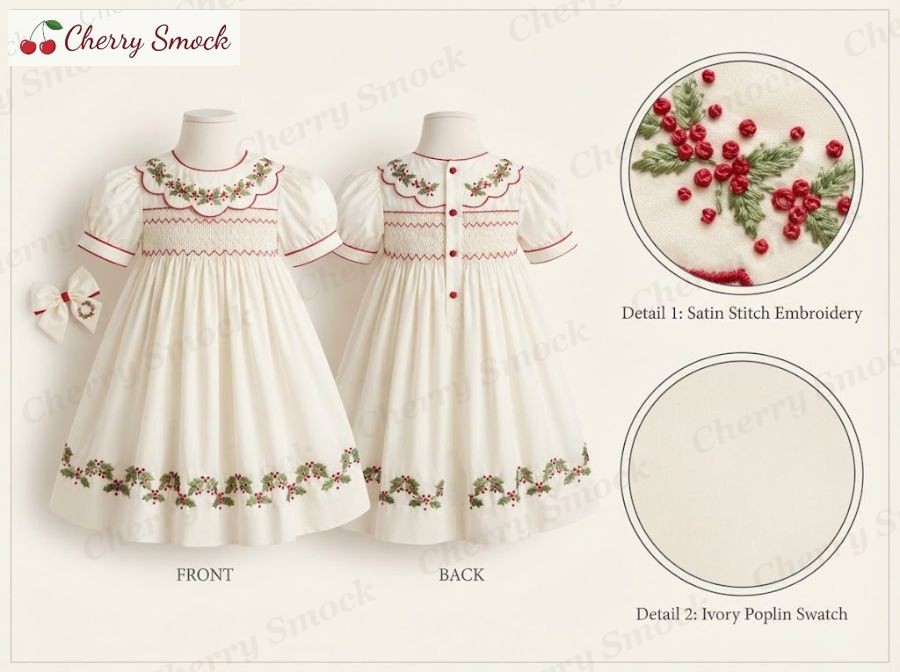
Embroidery traditions by country: a quick reference table
Knowing embroidery traditions by country helps you describe products accurately and spot claims that do not add up. This table covers the styles most often seen in children’s clothing.
| Country | Tradition | Typical look | Common kids use |
|---|---|---|---|
| England | English smocking | Pleated panels with geometric stitches | Bishop dresses, rompers |
| Portugal | Madeira embroidery | White-on-white cutwork and satin stitch | Christening and heirloom wear |
| Philippines | Lumban and Taal embroidery | Fine shadow work and drawn thread | Christening gowns, formal shirts |
| India | Chikankari and other regional styles | White shadow work, mirror work, chain stitch | Festive outfits, kurtas |
| Mexico | Otomi and regional embroidery | Bright animals and flowers | Dresses and blouses |
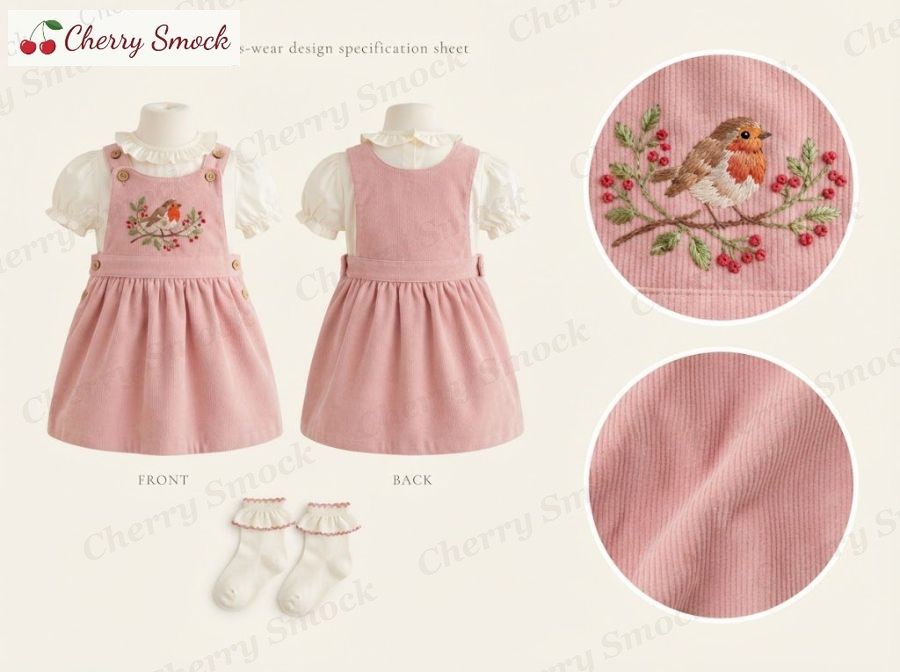
| Vietnam | Hand smocking and hand embroidery | Picture smocking, bullion roses, monograms | Smocked dresses, sibling sets |
Using the tradition in your product copy
Name the technique and where it comes from in one line, then explain what the customer gets: softness, durability or a keepsake. Avoid calling machine work “traditional”. Accurate labels build trust and reduce returns from disappointed buyers.
Embroidery traditions by country: summary
- Embroidery traditions by country differ in stitch, fabric and use.
- Use embroidery traditions by country to write accurate product descriptions.
- Heirloom pieces draw on several embroidery traditions by country, such as Madeira and Lumban.
- Vietnam is known among embroidery traditions by country for hand smocking.
- Check claims about embroidery traditions by country against the real stitches.
FAQ
What are the main embroidery traditions by country?
Well-known ones include Vietnamese and Spanish smocking, Philippine piña embroidery, Indian chikankari and aari, Madeira embroidery from Portugal, Ukrainian vyshyvanka, Romanian ie blouses and Palestinian tatreez.
Which tradition suits kids clothing best?
Smocking, light hand embroidery and Madeira-style eyelet work suit children’s clothes. Heavy metal thread and beads need a safety check.
Can I use a motif from another culture?
Learn its meaning first, credit the origin and consider working with a maker from that tradition.
Where can a small shop source hand embroidery?
Look in Vietnam, the Philippines, India and Portugal, and verify every claim with a sample.
Build a range around one tradition
Tell us the story you want to tell and we will propose hand-smocked designs in a 30-piece lot.
Message Cherrysmock on WhatsApp with the styles you are considering, or run your numbers first in the free Cherrysmock Planner, which calculates cost price, selling price, stock and cash for your shop.
Found this useful? Send it to a boutique owner who would use it too.
Keep reading
More guides for boutique owners, picked for you.


Ready-to-ship styles for your boutique
Low MOQ from 10 pcs per style. Ready to ship in 5-7 days.



Tell us your budget and customers. We reply within one business day.
WhatsApp usHow to order