To increase boutique sales by about 20% in 90 days, improve three things a little: average order value +9% (bundles and add-ons), repeat orders +5%, and sales protected from stock-outs +5%. Because gains multiply, 1.09 × 1.05 × 1.05 is about 1.20. It is an illustration, not a guarantee.
Read more
Who buys smocked dresses? Four common groups: gift buyers (grandparents, aunts), photo-shoot parents planning holiday cards, heirloom collectors who value hand work, and event or party buyers. Plan a price ladder: everyday pieces to start, hand smocked hero pieces, and party dresses for events.
Read more
Your reorder point is reached when days of cover (pieces in stock ÷ average pieces sold per day) falls to your supplier’s lead time plus a small buffer. Example: 9 pieces selling 0.81 per day is about 11 days of cover. With a 20-day lead time you are late; with...
Read more
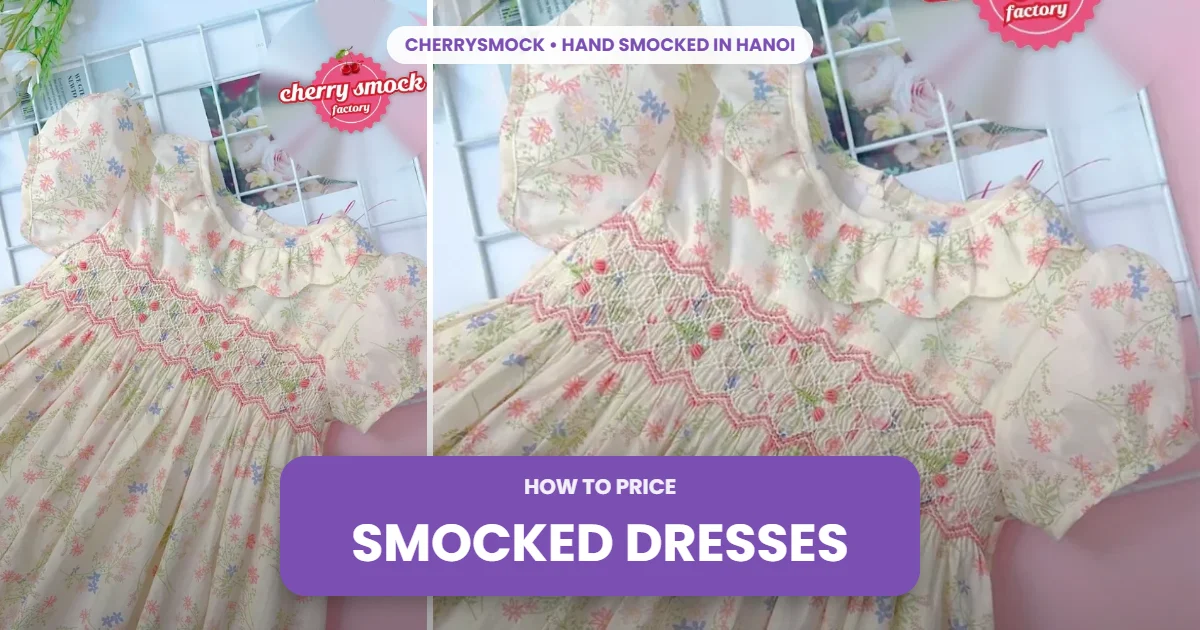
To price smocked dresses, start from landed cost, then multiply: 2x gives a 50% margin, 2.5x gives 60% and 3x gives about 67%. Hand smocked pieces take far more labour than machine-made ones, so most boutiques aim for 2.5x or more. Decide your lowest acceptable margin before any sale.
Read more
A kids boutique usually loses money despite good sales because of costs nobody counted: shipping and duty, unsold stock, returns, discounts and fixed costs. In our example, a $1,550 paper profit became $564 after 25% went unsold and 5% was returned. The fix is to price from landed cost and...
Read more
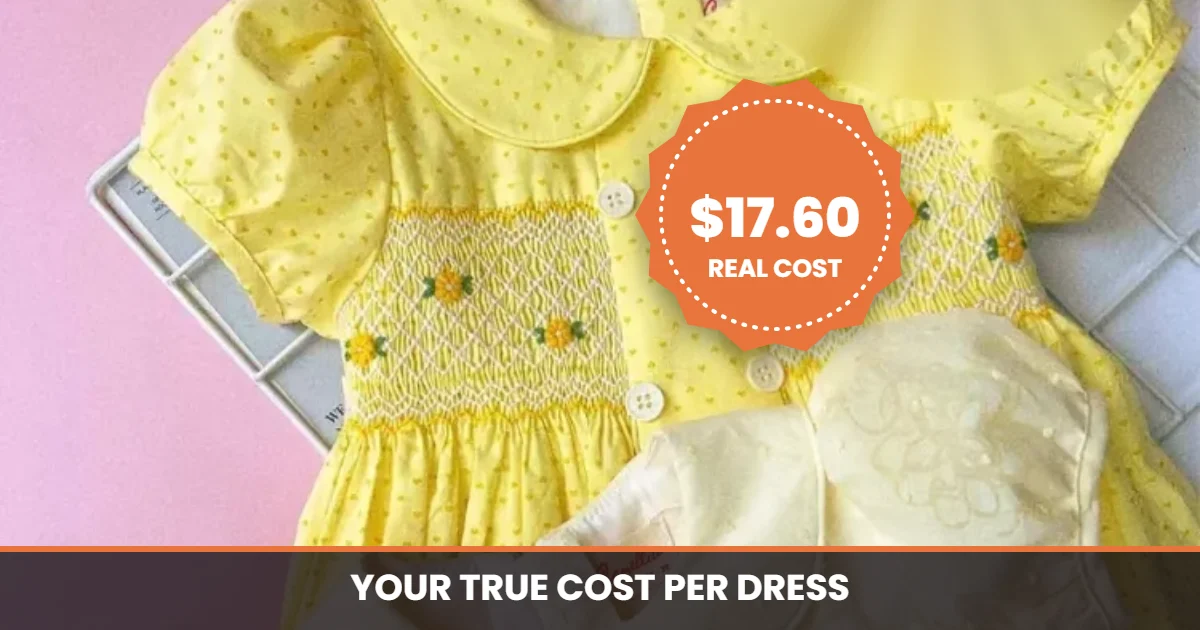
Landed cost is the full per-piece cost of a product once it reaches your shelf: factory price + shipping per piece + duty + packaging. Example: $12.00 + $5.00 + $0.60 = $17.60. Price from this number, not from the factory price, or your real margin will be lower than...
Read more
Quick answer: A smocked clothing business starts with four steps: register a legal entity and tax ID, define how you will reach customers, find a reliable hand smocking manufacturer, and budget for your first stock. A lean start is a few designs from 10 to 30 pieces each, not a...
Read more
Quick answer: Baby clothes are expensive because soft, safe fabrics cost more, they are made in many sizes and small batches, they must meet child safety standards, and hand details such as smocking take hours of labour. Materials alone often make up about 20 to 40 percent of the cost...
Read more