
Import duty is a tax a country charges on goods that cross its border. For a kids boutique buying from Vietnam, duty (plus VAT or GST in some countries) is part of landed cost, and it can change a profitable design into a thin one if you leave it out.
Last updated: October 28, 2026. Written by the Cherrysmock team from real wholesale orders of hand-smocked kids clothing made in Hanoi, Vietnam.
Quick answer: To calculate import duty: find the HS code of the garment, look up the duty rate for your country and the country of origin, apply it to the customs value, then add VAT or GST and any brokerage or processing fees. Rates change often, so check the official tariff before each season.
Buying wholesale for your boutique?
Cherrysmock is a hand-smocked children's clothing manufacturer in Hanoi. Browse wholesale smocked clothing, princess dresses wholesale (ready to ship), seasonal smocked collections or design your own smocked clothing. MOQ from 10 pcs per style.
Get the price list on WhatsAppThis guide gives the method and a worked example. It does not list rates because they have changed several times in recent years; use the official sources below. It is general information, not customs or legal advice.
Import duty step 1: find the HS code
Every product has a code in the Harmonized System. Woven cotton dresses for girls are commonly classified in chapter 62 (for example heading 6204 for girls’ dresses or 6209 for babies’ garments), while knitted garments fall in chapter 61. The exact code depends on fabric, construction and size, so confirm it with your customs broker or the supplier’s documents.
Step 2: Look up the rate
| Country | Official tariff source |
|---|---|
| United States | HTS database |
| United Kingdom | Trade Tariff |
| Canada | Canada Border Services Agency |
| Australia | Australian Border Force |
Search by HS code and country of origin. The rate may differ for Vietnam and for other origins, and additional tariffs can apply on top of the standard rate. In the United States, for example, extra tariffs on imports from some countries have been introduced and changed since 2025, so check the current status before you quote prices.
Step 3: Apply the rate to customs value
Customs value is generally the price you paid for the goods; some countries add freight and insurance. The UK and many others use the cost, insurance and freight value; the US usually uses the transaction value without international freight. Check the rule for your country.
A worked example (illustrative rates)
Assume a 30-piece lot at $27 per piece, freight $90, an example duty rate of 12 percent and VAT of 20 percent on a value that includes duty.
| Item | Calculation | Amount |
|---|---|---|
| Goods value | 30 x $27 | $810 |
| Freight and insurance | $90 | |
| Customs value (value including freight) | $900 | |
| Duty at 12% (example) | 0.12 x $900 | $108 |
| VAT base | $900 + $108 | $1,008 |
| VAT at 20% (example) | 0.20 x $1,008 | $201.60 |
| Total taxes | $309.60 |
If VAT is recoverable because you are registered, only the $108 duty enters landed cost: ($810 + $90 + $108) / 30 = $33.60 per piece. If VAT is not recoverable, landed cost is $309.60 higher in total: ($900 + $309.60 + $0) / 30 = $40.32 per piece. The rates in this example are illustrative, not actual.
Import duty step 4: add fees
Customs brokers, courier clearance fees, processing fees and port charges can add a fixed cost per shipment. Divide by pieces to get a cost per piece, and include it in landed cost. See our guide to freight per piece.
Small parcels and import duty rules
Many countries used to exempt low-value parcels from duty. These exemptions have been reduced or ended in several countries; the United States, for example, suspended its low-value exemption for imports in 2025. Check the current rule for your market rather than assuming small parcels are exempt.
Put import duty in your price
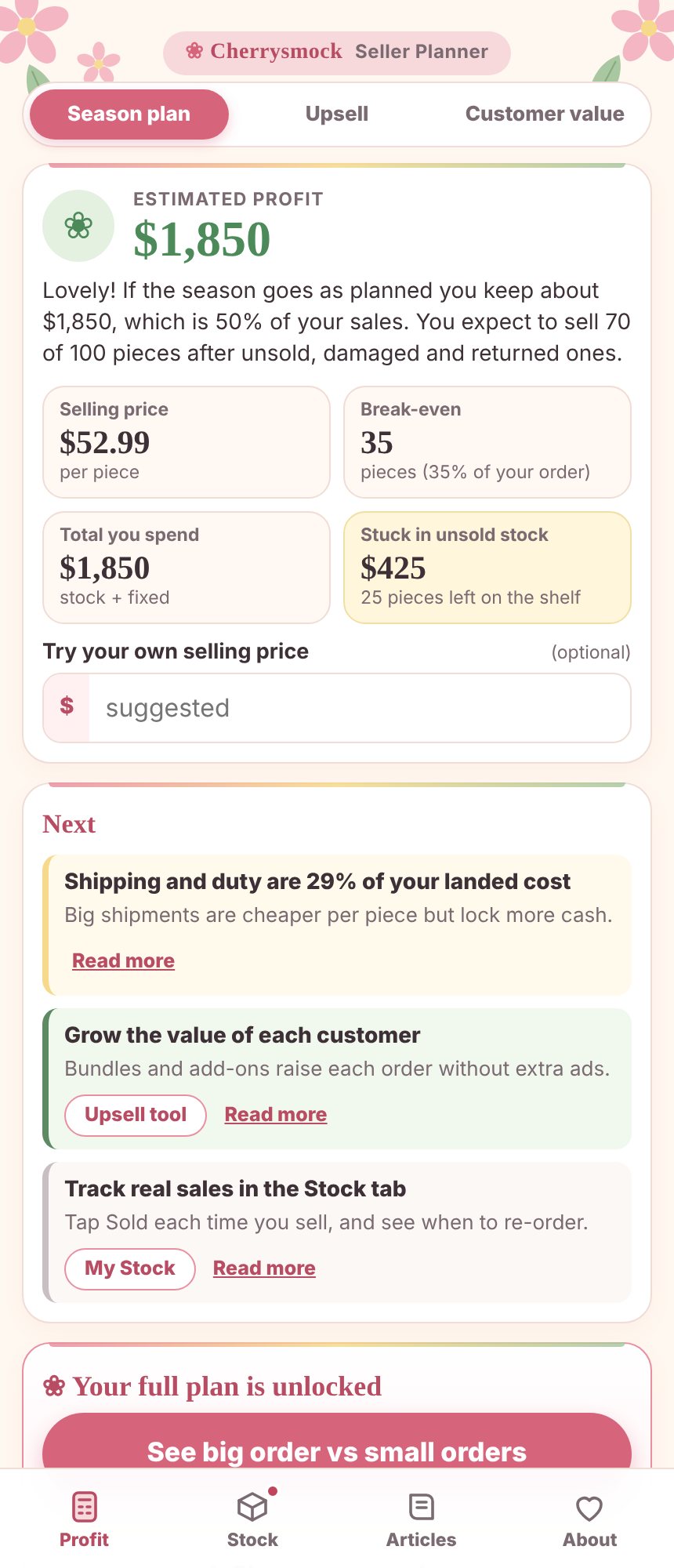
Use the planner to compare a landed cost with and without duty. If duty and shipping are 29 percent of landed cost, as in the planner’s sample, they matter as much as the factory price. Our guide to landed cost and pricing show how to turn it into a shelf price.
Mistakes to avoid
- Using old rates from a blog or video.
- Forgetting that the origin country can change the rate.
- Treating VAT as a cost when you can recover it, or the reverse.
- Not asking the supplier for the commercial invoice and packing list in the format your broker needs.
An import duty sheet for each design
Create one row per design with the HS code, origin, duty rate, VAT or GST treatment and the date you checked the rate. Update it each season. If a rate changes, you will see which designs are affected and can adjust prices before the next order. Import duty is one of the few costs you can look up in advance, so look it up.
Ask a broker once
A short call with a customs broker can confirm HS codes, documents and fees for your first shipment. After that, you can reuse the information. The small cost of advice is often smaller than the cost of a wrong code.
Import duty worked example: one carton of smocked dresses
Import duty is a percentage of the customs value, and each country defines that value differently. The example below uses an illustrative 15% rate to show the method only; always check the current rate for your exact HS code with your customs authority or broker.
| Step | US method (FOB basis) | UK, Canada, Australia method (CIF-type basis) |
|---|---|---|
| Goods value | $1,000 | $1,000 |
| Freight and insurance | Not included in duty base | Usually included: +$150 |
| Duty base | $1,000 | $1,150 |
| Duty at 15% (example) | $150 | $172.50 |
| Sales tax / VAT / GST | State sales tax applies at retail | VAT or GST charged on top at import |
Four checks before every shipment
- HS code: knitted and woven garments, cotton and synthetics, and babies’ sizes can fall under different codes and rates.
- Country of origin: some trade agreements reduce import duty for goods made in certain countries, with proof of origin.
- Invoice accuracy: fibre content, quantity and unit value must match the goods.
- Courier fees: express couriers add a brokerage or disbursement fee on top of duty.
Add import duty and fees to landed cost per piece before you set a retail price. A $2 difference per dress matters on a 60% margin.
Import duty: summary
- Import duty is calculated on a customs value that differs by country.
- Check the HS code first; it sets the import duty rate.
- Include import duty in landed cost before pricing.
- Trade agreements can lower import duty with proof of origin.
- Courier brokerage fees are added on top of import duty.
FAQ
How is import duty calculated?
Duty is the customs value multiplied by the duty rate for the HS code and origin. VAT or GST may then apply to the value plus duty.
What is the HS code for kids dresses?
Woven cotton dresses for girls are commonly in heading 6204, and babies’ garments in heading 6209, but the exact code depends on the product. Confirm with a customs broker.
Does Cherrysmock include duty in its quote?
Quotes are for the goods. Duty and taxes depend on your country and are usually paid on import; confirm the terms when you order.
Are small parcels exempt from import duty?
Not always. Low-value exemptions have been reduced or ended in several countries. Check the current rule for your market.
Get your landed cost before you commit
Tell us your country on WhatsApp and we will give you the goods quote and delivery details to enter in your landed cost.
Message Cherrysmock on WhatsApp with the styles you are considering, or run your numbers first in the free Cherrysmock Planner, which calculates cost price, selling price, stock and cash for your shop.
Found this useful? Send it to a boutique owner who would use it too.
Keep reading
More guides for boutique owners, picked for you.


Ready-to-ship styles for your boutique
Low MOQ from 10 pcs per style. Ready to ship in 5-7 days.




Tell us your budget and customers. We reply within one business day.
WhatsApp usHow to order