
Most complaints about smocked clothing come from a short list of repeat problems: fabric that is too thin, smocking that loses its stretch, shrinkage after washing, and uneven stitching. You can catch nearly all of them if you know what to look for. Use this checklist when you compare suppliers, when you read a product page, and when a delivery arrives.
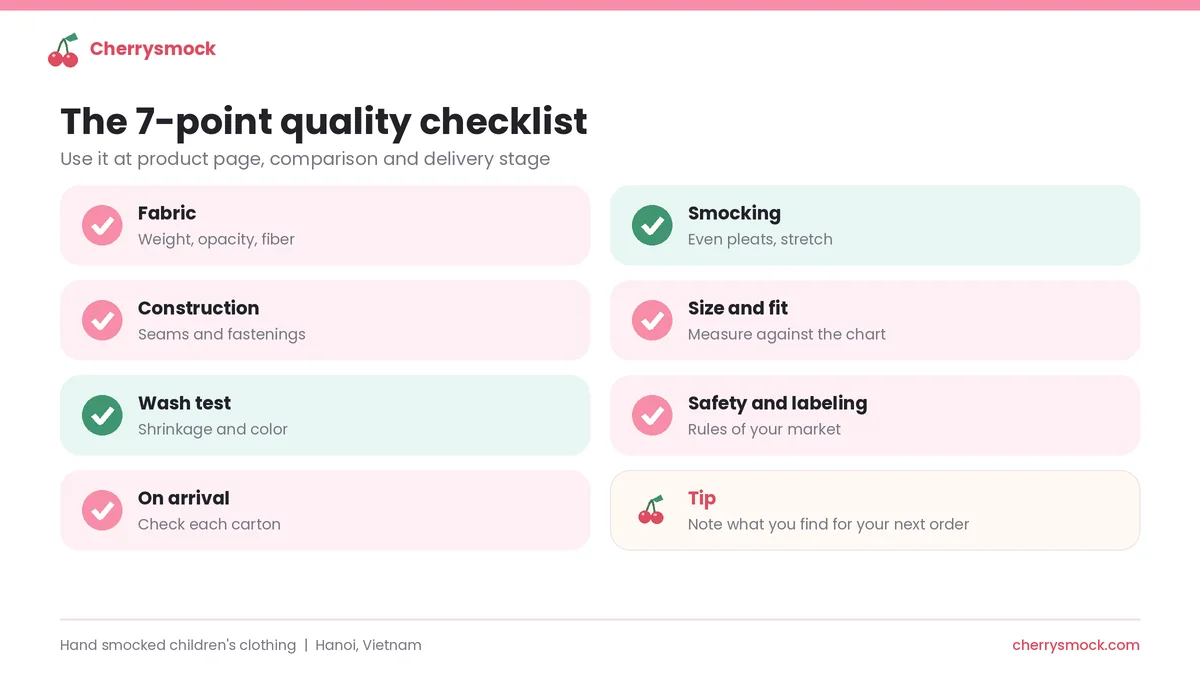
1. Fabric
- Weight and opacity. Hold the fabric up to the light. Light colors in thin cotton can show through, which matters for a summer dress.
- Fiber content. Check the label against what was listed on the product page. Cotton and cotton blends are common, and each wears and washes differently.
- Handle. The fabric should feel soft against the skin, with no scratchy trims or stiff linings.
- Print and dye. Look for even color. Dark colors should not bleed in the wash.
2. The smocking
- Even pleats. Rows should be straight and evenly spaced.
- Stretch and recovery. Gently stretch the smocked area. It should spring back without rippling or leaving gaps.
- The back of the work. Thread ends should be secured, with no long loose strands that could snag small fingers.
- Pattern placement. The design should be centered and match on both sides.
3. Construction
- Seams. Neat and flat, no skipped stitches, with inside edges finished so they do not fray.
- Fastenings. Buttons, ties and zips firmly attached. For children’s clothing, check small parts and drawstrings against the safety rules of your market.
- Hems and straps. Even and secure, with enough strength for daily wear.
- Lining. Smooth, with nothing that rubs or itches.
4. Size and fit
- Measure a piece against the size chart on at least chest, length and, where relevant, waist.
- Compare the cut with other brands you stock, and tell your customers if a style runs generous or small.
- Check that sizes in the same carton are consistent.
5. The wash test
Wash one piece the way you will tell customers to wash it. Then check shrinkage, color change, and whether the smocking kept its shape. For washing advice you can pass on, see our guide to how to care for smocked clothing.
6. Safety and labeling for your market
Requirements for children’s clothing differ by country, for example for drawstrings, small parts, flammability and labeling. Confirm what applies where you sell, and ask your supplier which documents they can provide.
7. When the delivery arrives
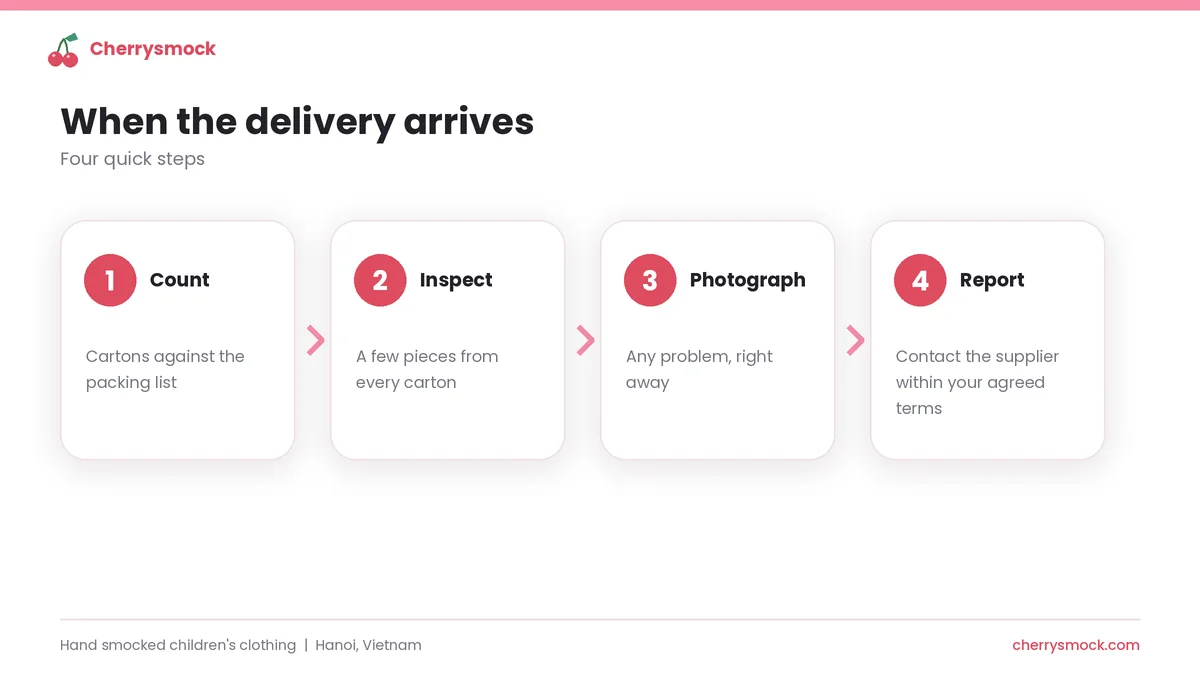
- Count cartons and compare them with the packing list.
- Open a few pieces from each carton and check stitching, color and size.
- Photograph any problem right away and contact the supplier within the time agreed in your terms.
- Keep a note of what you found, so your next order is better.
Why these problems happen
- Thin fabric is often a cost decision. Check weight and opacity yourself.
- Loose smocking can come from pleats that were not secured well. Test the stretch and recovery.
- Shrinkage usually means the fabric was not prepared before cutting, or care instructions were missing. Always run a wash test.
- Uneven stitching shows up when a style is rushed. Inspect the inside of the garment.
Frequently asked questions
How many pieces should I inspect in a delivery? Open a few from every carton, and more if you find a problem in the first ones.
What if I find a defect? Photograph it, note the carton and style, and contact the supplier straight away, within the time in your terms.
Do I need a wash test every time? Yes for new styles and new fabrics. For reorders of the same style and fabric, a quick spot check is usually enough.
Where can I find care advice to give my customers? See our guide to how to care for smocked clothing.
Questions about quality?
Cherrysmock makes hand-smocked children’s clothing in Hanoi, Vietnam. See the wholesale smocked clothing collection or contact us with any quality question before you order.
Keep reading
More guides for boutique owners, picked for you.


Ready-to-ship styles for your boutique
Low MOQ from 10 pcs per style. Ready to ship in 5-7 days.



Tell us your budget and customers. We reply within one business day.
WhatsApp usHow to order